Enhance Your Space with Directional Ceiling Spotlights
Directional ceiling spotlights are lighting fixtures designed to project a focused beam of light onto a specific area or object. Unlike general ambient lighting, which aims to illuminate an entire space uniformly, spotlights provide a more concentrated and controlled illumination. They typically consist of a housing that contains a light source (often LED, halogen, or fluorescent), a reflector, and a lens. The distinguishing feature is their adjustability, allowing the user to direct the light beam in various directions, thereby highlighting features, creating pathways, or adding depth to a room.
The history of spotlighting can be traced back to theatrical lighting Villenas, where focused beams were crucial for illuminating performers and stage elements. Over time, this concept migrated into architectural and interior design, evolving from bulky, fixed fixtures to the more discreet and versatile directional ceiling spotlights common today. Early iterations often used incandescent bulbs, which generated significant heat and consumed considerable energy. The advent of halogen technology offered brighter and more efficient alternatives, paving the way for the widespread adoption of spotlights in homes and commercial settings. The most significant leap occurred with the development of LED technology, which brought unparalleled energy efficiency, longevity, and a wider range of color temperatures and beam angles.
Understanding the principles of light is fundamental to effectively utilizing directional ceiling spotlights. Light travels in waves and interacts with surfaces in various ways. Specular reflection occurs when light bounces off a smooth surface at a predictable angle, creating glare. Diffuse reflection, conversely, happens when light strikes an uneven surface and scatters in multiple directions, producing softer, more even illumination. Directional spotlights, by their nature, often create highly specular reflections when aimed at polished surfaces, highlighting textures and materials. Conversely, if your goal is softer illumination, consider aiming spotlights at matte surfaces or using fixtures with wider beam angles to create a more diffuse effect.
Temperature and color rendering index (CRI) are also critical considerations. Color temperature, measured in Kelvin (K), describes the perceived warmth or coolness of light. Warm white (2700K-3000K) evokes a cozy atmosphere, akin to candlelight. Neutral white (3500K-4500K) provides a balanced, clear light, suitable for task-oriented areas. Cool white (5000K-6500K) mimics natural daylight, often used in commercial or industrial settings. CRI, a scale from 0 to 100, indicates how accurately a light source renders colors compared to natural daylight. A high CRI (90+) is desirable for areas where accurate color perception is important, such as art displays or kitchens. Directional spotlights with adjustable color temperature and high CRI offer greater flexibility in meeting various lighting needs.
Types of Directional Ceiling Spotlights
The variety of directional ceiling spotlights available reflects the diverse applications they serve. Each type offers distinct advantages and is suited for specific design objectives.
Recessed Spotlights
Recessed spotlights, also known as downlights or pot lights, are installed within the ceiling, with only the trim and light aperture visible. This design provides a clean, unobtrusive aesthetic, allowing the light to appear as if emanating directly from the ceiling. They are particularly well-suited for modern or minimalist interiors where a seamless look is desired.
Gimbaled Recessed Spotlights
Gimbaled recessed spotlights feature an adjustable inner housing that allows the light source to swivel and tilt within its fixed outer trim. This adjustability is crucial for task lighting, accent lighting, and wall washing, providing the flexibility to direct light precisely where needed after installation. Consider these when the exact placement of illuminated objects might change or when you need to adapt your lighting to evolving design preferences.
Eyeball Recessed Spotlights
Eyeball recessed spotlights resemble an eye, with a spherical or semi-spherical light source that protrudes slightly from the ceiling and can be rotated and angled. They offer a greater degree of adjustability compared to gimbaled fixtures, making them ideal for highlighting artwork, architectural features, or specific points of interest. However, their more prominent appearance may not suit all aesthetic preferences.
Surface-Mounted Spotlights
Surface-mounted spotlights are affixed directly to the ceiling surface, making them a suitable option where ceiling cavities are shallow or when a more prominent fixture is desired. They offer a bolder visual statement than recessed options and can contribute to the overall architectural character of a space.
Track Spotlights
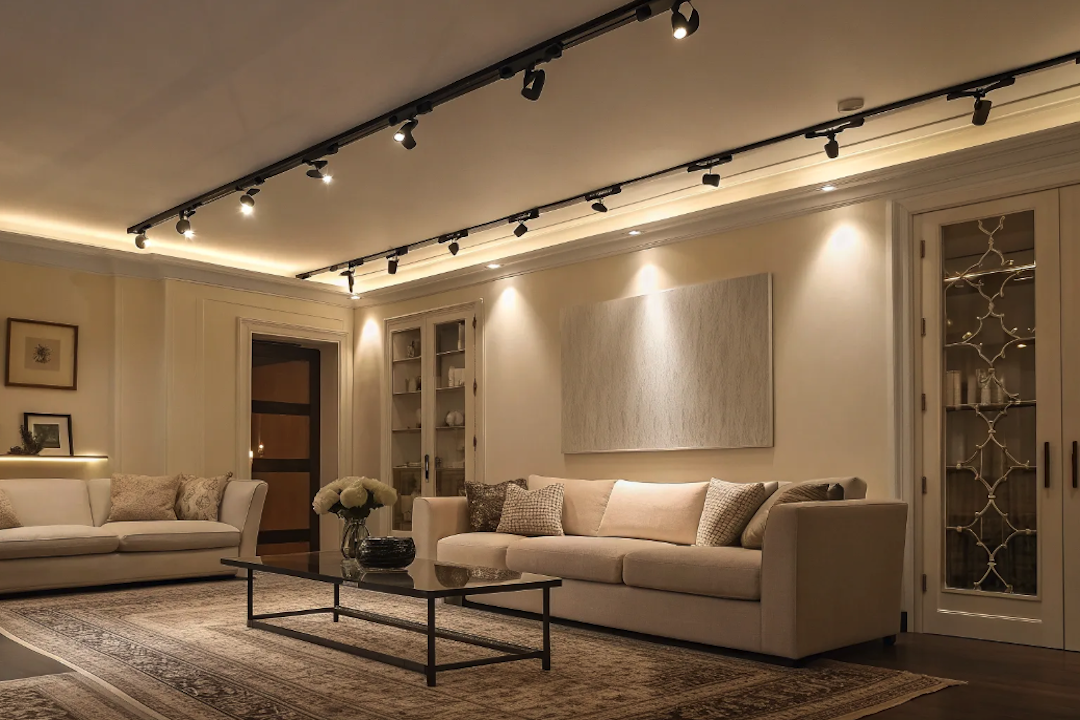
Track spotlights comprise individual spotlight heads mounted on an electrical track. This system provides exceptional flexibility, as the spotlight heads can be repositioned, added, or removed along the track. They are highly adaptable for retail displays, art galleries, and modern living spaces where dynamic lighting arrangements are frequently needed. The analogy of building blocks is appropriate here; you can combine and arrange them to create bespoke lighting solutions.
Canopy-Mounted Spotlights
Canopy-mounted spotlights consist of one or more spotlight heads attached to a single circular or rectangular base (canopy) that is fixed to the ceiling. These are often used as focal point lighting in smaller areas or to highlight specific elements, such as a dining table or a fireplace. They offer a more consolidated appearance than track lighting.
Semi-Recessed Spotlights
Semi-recessed spotlights bridge the gap between fully recessed and surface-mounted options. A portion of the fixture is recessed into the ceiling, while the light source and often a decorative trim extend slightly below the surface. This design offers a balance between an integrated look and greater adjustability or decorative appeal.
Applications and Design Considerations
The strategic placement and aiming of directional ceiling spotlights can profoundly influence the ambiance, functionality, and aesthetic of any space. Think of them as individual brushstrokes in the larger painting of your room’s illumination.
Accent Lighting
Accent lighting is a primary application of directional spotlights, designed to draw attention to specific objects or architectural features. This could include artwork, sculptures, built-in shelving, or textured walls.
Highlighting Artwork
When illuminating artwork, consider the “cone of light” a spotlight emits. You want to illuminate the entire piece without spilling light excessively onto the surrounding wall. A good rule of thumb is to aim the spotlight at an angle that avoids glare and shadows on the artwork itself. The intensity and beam spread should be proportionate to the size of the piece. A smaller beam angle generates a more dramatic, focused highlight, while a wider angle provides more even illumination across a larger area. The analogy here is a magnifying glass; you’re focusing light to reveal detail.
Emphasizing Architectural Features
Directional spotlights can be used to emphasize architectural details such as textured stone walls, crown molding, or structural columns. Grazing light—where the spotlight is positioned close to a surface and aimed almost parallel to it—can dramatically enhance texture and depth. Washing light—projecting light across a larger surface—can bring attention to a feature like a fireplace or a decorative alcove.
Task Lighting
For activities that require concentrated illumination, such as reading, cooking, or working, directional spotlights can serve as effective task lighting. Their ability to deliver focused light precisely where needed minimizes glare and shadows on the work surface.
Kitchen Workspaces
In kitchens, spotlights positioned above countertops can provide crucial task lighting for food preparation. Ensure the spotlights are placed so that they do not cast your shadow over the work surface. The placement should be slightly in front of you, from a ceiling perspective, to illuminate the area effectively.
Reading Nooks and Desks
In reading nooks or above desks, a well-placed directional spotlight can illuminate text without disturbing others in the room. Consider adjustable fixtures that allow you to fine-tune the light direction to avoid glare on screens or printed materials.
Wall Washing
Wall washing involves illuminating an entire wall surface evenly, creating a soft, diffuse glow that can make a room feel larger and brighter. This is achieved by positioning spotlights at a specific distance from the wall and using appropriate beam angles.
Creating an Expansive Feel
When spotlights are aimed at perimeter walls, especially those of a lighter color, they can create the illusion of a more expansive space. This is particularly effective in smaller rooms or hallways, acting as a visual stretcher.
Enhancing Surface Texture
While grazing light emphasizes individual textures, a broader wall wash can subtly highlight general surface variations without creating stark contrasts. This is useful for feature walls with subtle patterns or wallpaper.
Installation and Technical Considerations
Proper installation and an understanding of technical specifications are paramount for the safe and effective operation of directional ceiling spotlights. Treat the electrical system with respect, as it can be unforgiving if mishandled.
Electrical Requirements
Before installation, verify the existing electrical wiring’s capacity and adherence to local building codes. Most ceiling spotlights operate on standard household voltage (e.g., 120V in North America, 230V in Europe).
Dimmer Compatibility
If you intend to use dimmers to control the light intensity, ensure both the spotlights and the dimmer switch are compatible. LED luminaires often require specific LED-compatible dimmers (trailing edge or leading edge) to prevent flickering or damage. Consult the manufacturer’s specifications for both the spotlight and the dimmer.
Junction Box and Wiring
All electrical connections must be made securely within approved junction boxes. Ensure proper grounding to prevent electrical hazards. If you are unfamiliar with electrical wiring, it is highly advisable to consult or hire a qualified electrician. This not a DIY project for the inexperienced.
Beam Angle and Lumens
The beam angle, measured in degrees, determines how wide or narrow the light beam is. Lumens, a measure of total visible light emitted by a source, indicate brightness.
Narrow (Spot Beam)
Spot beams (typically under 20 degrees) create highly focused light, ideal for emphasizing small objects or creating dramatic highlights. Think of a laser pointer, albeit a much wider, softer version.
Medium (Flood Beam)
Flood beams (20-40 degrees) provide a broader spread of light, suitable for accentuating larger objects or for general task lighting. This is more akin to a traditional flashlight beam.
Wide (Wide Flood Beam)
Wide flood beams (over 40 degrees) offer a very broad distribution of light, useful for wall washing or general ambient lighting in specific zones. Imagine a diffused lantern in comparison to the previous examples.
Placement and Spacing
The effectiveness of directional spotlights heavily relies on their thoughtful placement and spacing. Poorly placed spotlights can create harsh glare, unflattering shadows, or simply fail to achieve the desired effect.
Grid vs. Strategic Placement
While a symmetrical grid pattern might seem straightforward, it often leads to uniform, uninspired lighting. Strategic placement involves positioning spotlights based on the objects or areas you intend to illuminate, creating layers of light that add depth and interest. This is the difference between a functional grid and an artistic composition.
Avoiding Glare
Glare occurs when bright light interferes with vision, causing discomfort or reduced visibility. To minimize glare, avoid aiming spotlights directly into common lines of sight. When illuminating walls or artwork, consider the viewing angle and ensure the light source is not directly visible. Using diffusers or fixtures with recessed light sources can also help.
Maintenance and Energy Efficiency
Like any electrical fixture, directional ceiling spotlights require periodic maintenance for optimal performance and longevity. Modern spotlights, especially LED-based ones, offer significant energy efficiency benefits.
Cleaning and Inspection
Regular cleaning of the spotlight lenses and trims prevents dust buildup, which can diminish light output and affect color temperature. Use a soft, dry cloth or a mild cleaning solution if necessary. Periodically inspect wiring and connections for any signs of wear or damage.
Bulb Replacement (if applicable)
For fixtures that use replaceable bulbs (e.g., GU10, MR16), ensure you replace them with bulbs of the correct wattage, voltage, and base type. LED bulbs are generally more energy-efficient and have a much longer lifespan than halogen or incandescent alternatives. Always disconnect power before attempting bulb replacement.
LED Technology Benefits
LED spotlights offer several advantages over traditional light sources:
- Energy Efficiency: LEDs consume significantly less electricity, leading to lower utility bills and reduced environmental impact. They are a highly efficient converter of electricity into light, with minimal waste heat.
- Long Lifespan: LEDs typically last tens of thousands of hours, drastically reducing the frequency of bulb replacements and associated maintenance costs. This longevity translates to less hands-on work and less waste.
- Cool Operation: LEDs generate minimal heat, making them safer to touch and reducing the cooling load on air conditioning systems.
- Durability: LEDs are solid-state devices and are generally more resistant to vibration and impact than filament-based bulbs.
Future Trends in Directional Ceiling Spotlights
Innovation continues to shape the landscape of lighting technology. Directional ceiling spotlights are no exception, with ongoing advancements enhancing their functionality, control, and integration into smart environments.
Smart Lighting Integration
The rise of smart home technology has extended to lighting. Directional spotlights are increasingly integrated with smart hubs and voice assistants, allowing users to control brightness, color temperature, and even beam angle via smartphone apps or voice commands. This offers unprecedented control and automation, akin to an orchestra conductor commanding an entire suite of instruments.
Tunable White and RGBW Options
Beyond simple dimming, tunable white technology allows users to adjust the color temperature of their spotlights from warm to cool white, adapting the ambiance to different times of day or activities. RGBW (Red, Green, Blue, White) spotlights offer an even broader spectrum of colors, enabling dramatic effects and personalized environments. Imagine painting a room with light, not just illuminating it.
Miniaturization and Discreet Designs
As LED technology becomes more compact, manufacturers are producing increasingly discreet and miniaturized directional spotlights. These smaller fixtures can be seamlessly integrated into architectural elements, offering powerful illumination with minimal visual intrusion. This trend emphasizes the idea of light being a design element in itself, rather than the fixture being the focus.
Advanced Optics and Beam Shaping
Further advancements in optical design are allowing for more precise control over light distribution. Innovations such as adjustable beam angles and specialized lenses enable even greater flexibility in tailoring the light output to specific requirements, from narrow razor-sharp beams to wide, uniform washes, all from a single fixture. This represents a greater understanding and manipulation of light itself.
By understanding the various types, applications, technical considerations, and emerging trends of directional ceiling spotlights, you can effectively leverage these versatile fixtures to enhance the aesthetic appeal and functionality of any space. Their role is not merely to provide light, but to sculpt and define environments, acting as a crucial element in well-considered interior design.