Smart Light Bulb Size & Wattage Guide: Choosing the Perfect Fit
Smart light bulbs come in a surprising variety of sizes and wattages, and picking the right one is key to getting the look and light you want without any hassle. The main thing to remember is that while the ‘wattage equivalent’ tells you how bright a smart bulb is, the actual physical size and shape, like A19 or BR30, determines if it’ll fit your fixture and spread light effectively. We’ll dive into how to decode these numbers and letters so you can confidently choose the perfect smart bulb for every spot in your home.
Decoding the Physical Sizes and Shapes
When you’re staring at a smart light Towali bulb box, you’ll see a string of letters and numbers that might look like an alien language: A19, BR30, GU10, candelabra. These aren’t just random codes; they tell you the bulb’s shape and, crucially, its diameter. Understanding these is the first step to making sure your new smart bulb actually fits into your lamp or ceiling fixture.
Standard Screw-In Bulbs (Edison Base)
Most common light fixtures in homes use what’s called an Edison screw base. You’ll typically find an E26 base in North America and E27 in many other parts of the world, though they’re often interchangeable for lower wattage LED bulbs. The number refers to the diameter of the screw base in millimeters.
A-Shape Bulbs: The Everyday Look
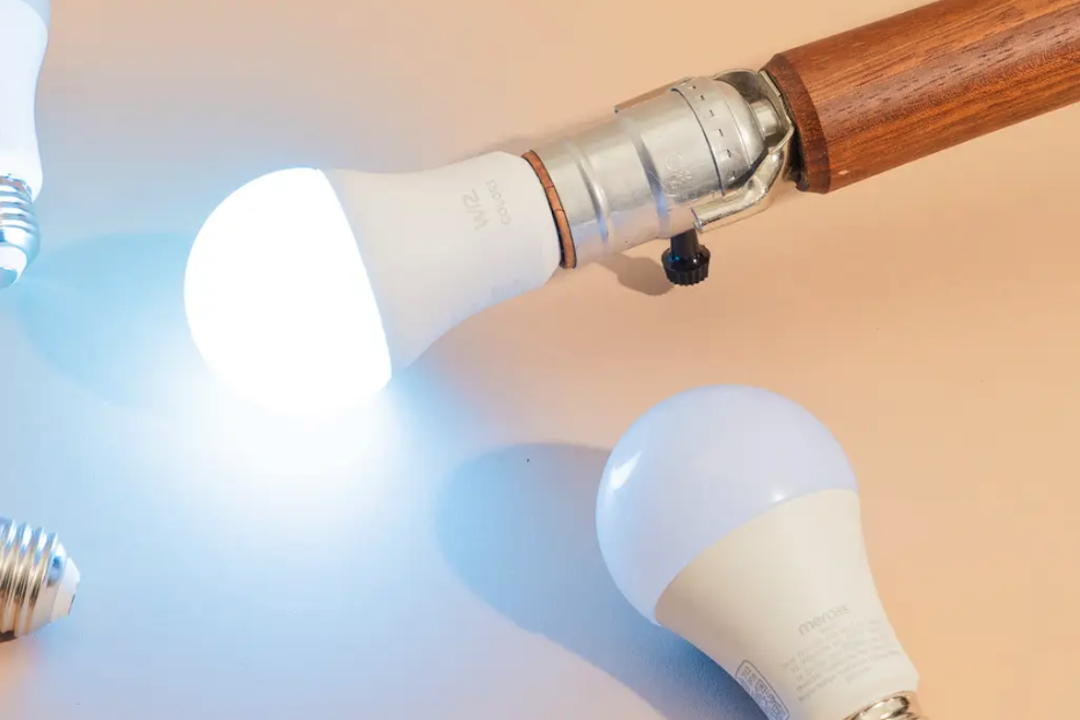
The “A” in A19 stands for “arbitrary,” which isn’t very helpful, but it refers to the traditional pear shape of a standard incandescent bulb. The “19” indicates the diameter across the widest point of the bulb in eighths of an inch. So, an A19 bulb is 19/8ths of an inch, or 2.375 inches (about 60mm) wide. This is your everyday, general-purpose bulb that fits most lamps, ceiling fixtures, and open pendants. Many smart bulbs come in the A19 shape because it’s so versatile.
B & C-Shape Bulbs: Decorative Touches
When you see “B” or “C” followed by a number, you’re usually looking at smaller, more decorative bulbs.
B10 or B11: Bullet Tip
These are sometimes called “bullet tip” or “blunt tip” bulbs. They have a torpedo-like shape, often used in chandeliers or wall sconces where the bulb is visible. The “10” or “11” again refers to the diameter in eighths of an inch. They offer a more refined look than a standard A-shape bulb.
C7 or C9: Christmas Lights and Night Lights
These are typically smaller, candle-shaped bulbs, often seen in night lights (C7) or string lights (C9). They have a smaller candelabra base (E12 in North America), so you won’t typically find them as smart bulbs for general room lighting, but it’s good to know what they are.
P-Shape Bulbs: The Small Globe
P-shaped bulbs are often referred to as “globe” bulbs, but they are generally smaller and more elongated than true G-shape globe bulbs. The “P” stands for “pear” shape. They are often used in decorative fixtures where a smaller, rounded bulb is desired.
G-Shape Bulbs: The True Globes
“G” stands for “globe.” These are spherical bulbs. You’ll see G16.5, G25, G30, G40, and even larger. The number indicates the diameter in eighths of an inch. So, a G25 is 25/8ths of an inch (about 3.125 inches or 79mm) wide. Globe bulbs are popular in bathroom vanity strips, pendant lights, or open fixtures where the bulb itself is part of the aesthetic. Smart G-shape bulbs are fantastic for creating a soft, diffused light when exposed.
ST-Shape Bulbs: Vintage Charm
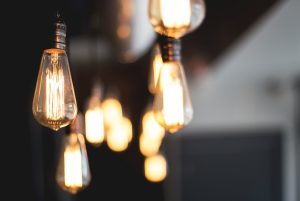
“ST” stands for “straight tubular” or “squirrel cage.” These are the vintage-style bulbs, often with exposed filaments (though in smart LED versions, these are just decorative elements). They have an elongated, often slightly teardrop-like shape with a distinct neck. They’re all about aesthetics and are perfect for exposed fixtures where you want that classic, industrial, or Edison-era look. Smart ST bulbs combine modern tech with old-world charm.
Reflector and Specialty Bulbs
Not all bulbs are designed to spread light in all directions. Some are built to focus light, which is crucial for recessed lighting, track lighting, or outdoor floodlights.
BR-Shape Bulbs: Broad Reflector
“BR” stands for “bulged reflector.” These bulbs have a wider, parabolic shape with a diffusing lens, designed to cast a wide beam of light (typically 90-120 degrees). The “30” in BR30 means it’s 30/8ths of an inch (about 3.75 inches or 95mm) across at its widest point. BR bulbs are commonly used in recessed lighting cans, especially for general room illumination, as they spread light evenly. Smart BR30 bulbs are very popular for smart recessed lighting applications.
PAR-Shape Bulbs: Parabolic Aluminized Reflector
“PAR” stands for “parabolic aluminized reflector.” These bulbs have a more precise, tighter beam angle than BR bulbs (often 30-45 degrees, though they can vary widely). They’re designed for more focused lighting, like accenting artwork, illuminating specific areas, or for outdoor floodlights. PAR38 (4.75 inches or 121mm wide) is a common size for outdoor use and larger indoor recessed cans, while PAR20 (2.5 inches or 64mm wide) and PAR30 (3.75 inches or 95mm wide) are used in smaller indoor fixtures. Smart PAR bulbs are excellent for directional smart lighting needs.
R-Shape Bulbs: Reflector
“R” stands for “reflector.” These are similar to BR bulbs but typically have a smaller, more traditional reflector shape and less of a “bulged” look. R20 (2.5 inches or 64mm wide) and R30 are common sizes. They are also used in recessed lighting, though sometimes less common than BR or PAR for smart applications.
Bi-Pin and Other Specialty Bases
Not all bulbs twist in. Some have pins that push and twist into place, or other unique bases.
GU10: Twist and Lock Spotlights
The “GU” refers to a specific type of bi-pin base with two thick pins that have small feet on the end. You insert them and twist to lock them into place. The “10” indicates the distance between the center of the pins in millimeters. GU10 bulbs are compact, spotlight-style bulbs, very common in track lighting, display lighting, and some recessed fixtures, especially in Europe but increasingly in North America. Smart GU10 bulbs are perfect for adding smart functionality to these focused lighting applications.
MR16: Small, Directional Halogen Replacements
“MR” stands for “multifaceted reflector.” These are typically very small, low-voltage bulbs often used in track lighting, display cases, or landscape lighting. They have two thin pins (a bi-pin base, but not GU10) that simply push in. Smart MR16 bulbs exist, but they are less common than other smart bulb types due to their specialized use and often low voltage requirements which can complicate smart home integration.
Candelabra Base (E12): Small and Decorative
As mentioned earlier, the E12 base is smaller than the standard E26/E27. It’s often found on decorative bulbs like C7, C9, B10, and some smaller G-shapes. While less common for general smart lighting, some smart bulbs do come with an E12 base for chandeliers or decorative fixtures.
Understanding Brightness and Wattage Equivalents
Once you’ve got the physical fit down, the next big question is “how bright will it be?” With smart LED bulbs, wattage doesn’t tell you much about brightness anymore. You need to look at lumens.
Lumens: The True Measure of Brightness
Forget watts for brightness with LEDs. Lumens (lm) are the only accurate way to compare how much light a bulb puts out. More lumens mean a brighter light.
- 150-300 lumens: Roughly equivalent to a 25W incandescent bulb. Good for accent lighting, night lights, or very dim decorative purposes.
- 300-500 lumens: Roughly equivalent to a 40W incandescent bulb. Suitable for mood lighting, small lamps, or areas where you don’t need much brightness.
- 700-900 lumens: Roughly equivalent to a 60W incandescent bulb. This is the most common brightness for general-purpose smart bulbs in a typical A19 shape. It’s good for most rooms, task lighting, and general illumination.
- 1000-1500 lumens: Roughly equivalent to a 75W-100W incandescent bulb. These are brighter options, great for larger rooms, kitchens, or anywhere you need significant illumination. Some larger smart bulbs (like BR30 or PAR38) might offer these higher lumen outputs.
- 1500+ lumens: Equivalent to 100W+ incandescents. These are very bright and suitable for large open-plan areas, workshops, or high-ceiling rooms.
Many smart bulbs are dimmable (a key smart feature!), so you can choose a higher lumen bulb and dim it down, giving you more flexibility.
Wattage: Power Consumption, Not Brightness
With smart LEDs, the “wattage” listed on the box (e.g., “9W LED”) tells you how much electricity the bulb consumes, not how bright it is. An 8W smart LED bulb might produce the same amount of light (lumens) as an old 60W incandescent bulb, but it uses significantly less power. This is where the energy savings come in. So, while you’ll see a wattage number, always prioritize lumens for brightness.
Wattage Equivalent: A Handy (But Not Perfect) Reference
Manufacturers often list a “wattage equivalent” (e.g., “60W Equivalent”) to give consumers a familiar reference point for brightness. This tells you that the LED bulb produces roughly the same amount of light as an incandescent bulb of that wattage. It’s useful for a quick comparison, but remember that the actual lumens are the most precise measure.
Color Temperature and Color Changing (CCT and RGB)
Beyond size and brightness, smart bulbs offer incredible control over the quality of light. This is where they truly shine (pun intended!).
Color Temperature (CCT): Setting the Mood
Color temperature is measured in Kelvins (K) and describes how warm or cool the white light appears.
- Warm White (2200K – 2700K): Similar to traditional incandescent bulbs, this light has a yellowish or orangeish hue. It’s cozy, inviting, and relaxing, perfect for bedrooms, living rooms, and dining areas. Many smart bulbs can replicate this classic warm glow.
- Soft White (2700K – 3000K): A slightly less yellow, more natural white. Still warm and comfortable, but a bit brighter and clearer. Good for general living spaces.
- Neutral White / Bright White (3000K – 4000K): A balanced, crisp white light. It feels more energetic and is often used in kitchens, bathrooms, offices, or utility areas where clear visibility is important.
- Cool White / Daylight (4000K – 5000K): Has a bluish tint, mimicking natural daylight. It’s stimulating and helps with focus, ideal for task lighting, workshops, or reading areas.
- Daylight Blue (5000K – 6500K): A very bright, almost clinical blue-white light. While good for very specific tasks or certain aesthetic choices, it can feel harsh in residential settings.
Many smart bulbs offer “tunable white,” meaning you can adjust the color temperature across a wide range (e.g., 2700K to 6500K). This is fantastic for adaptability, allowing you to have warm light in the evening and bright, cool light for morning tasks all from the same bulb.
Full Color (RGB): A Spectrum of Possibilities
RGB smart bulbs (Red, Green, Blue) can produce millions of different colors, along with various shades of white. This opens up a world of creative lighting.
- Mood Lighting: Create a relaxing blue for winding down, a vibrant red for a party, or a gentle green for a nature-inspired feel.
- Seasonal Decor: Change your lighting to match holidays or seasons – orange and purple for Halloween, red and green for Christmas.
- Accent Lighting: Highlight architectural features, plants, or artwork with precise color washes.
- Entertainment Integration: Some smart bulbs can sync with music or movies, creating an immersive experience.
While full RGB bulbs offer the most flexibility, they are generally a bit more expensive than tunable white-only bulbs. Consider if you truly need the full spectrum of colors or if tunable white is sufficient for your needs.
Compatibility and Smart Features
Choosing the right physical size and brightness is crucial, but for smart bulbs, you also need to think about how they’ll connect to your smart home ecosystem and what features they offer.
Connection Protocols: How They Talk
Smart bulbs communicate with your phone or smart home hub using various wireless protocols.
Wi-Fi: Direct Connection
Many smart bulbs connect directly to your home’s Wi-Fi network. This is often the easiest to set up, as you don’t need a separate hub. Brands like Philips Wi-Fi, Wyze, and some Meross bulbs use Wi-Fi.
- Pros: Easy setup, no hub needed, widely supported.
- Cons: Can sometimes bog down your Wi-Fi network if you have many devices, might have slightly slower response times compared to hub-based systems, and can be more susceptible to Wi-Fi interference.
Zigbee: Hub-Based Efficiency
Zigbee is a mesh network protocol, meaning devices can relay signals to each other, extending the range and creating a more robust network. It requires a dedicated hub (like Philips Hue Bridge, SmartThings Hub, or Amazon Echo with built-in Zigbee).
- Pros: Very reliable and responsive, uses less power than Wi-Fi bulbs, creates a strong mesh network, good for large smart home setups.
- Cons: Requires a hub, which is an additional cost and device.
Z-Wave: Another Hub-Based Option
Similar to Zigbee, Z-Wave is another mesh network protocol designed for smart home devices. It also requires a hub and operates on a different radio frequency, often making it less prone to interference from Wi-Fi.
- Pros: Very robust mesh network, excellent range, typically secure.
- Cons: Requires a hub, fewer smart bulb options compared to Zigbee or Wi-Fi.
Bluetooth: Local and Simple
Some smart bulbs use Bluetooth for direct connection to your phone or a smart speaker.
- Pros: Very easy to set up for individual bulbs, no hub or Wi-Fi needed for basic control.
- Cons: Limited range (you need to be relatively close to the bulb), doesn’t easily scale to a whole-home system, typically no remote control when away from home unless bridged through a smart speaker.
Ecosystem Compatibility: Playing Nicely Together
It’s vital to ensure your smart bulbs work with your chosen smart home ecosystem.
- Voice Assistants: Do they work with Alexa, Google Assistant, or Apple HomeKit (Siri)? Most major brands support at least two, if not all three. HomeKit certification is often stricter.
- Smart Home Hubs: If you have a SmartThings, Hubitat, or Home Assistant setup, check for direct compatibility.
- Manufacturer Apps: All smart bulbs will have their own app for initial setup and control. Make sure it’s user-friendly and offers the features you need.
Key Smart Features to Look For
Beyond basic on/off and dimming, smart bulbs offer a host of features.
- Schedules and Timers: Automate lights to turn on/off at specific times or based on sunrise/sunset.
- Scenes and Routines: Create custom lighting presets (e.g., “Movie Night” scene dims lights to 2700K and 30% brightness).
- Remote Control: Control your lights from anywhere with your smartphone.
- Geofencing: Lights turn on when you arrive home and off when you leave.
- Vacation Mode: Randomly turn lights on and off to simulate occupancy.
- Energy Monitoring: Some apps can track your bulb’s energy usage.
- Music Sync: Lights change with the rhythm and beat of music.
Practical Considerations and Installation Tips
You’ve picked out the perfect smart bulb – now let’s make sure it’s a smooth ride from unboxing to full functionality.
Fixture Compatibility and Limitations
Just because a bulb fits doesn’t mean it’s ideal.
- Enclosed Fixtures: Some smart bulbs generate more heat than traditional LEDs. Always check if the bulb is rated for enclosed fixtures. Using a non-rated bulb in an enclosed fixture can shorten its lifespan significantly and, in rare cases, pose a fire risk. Reflector bulbs (BR, PAR) are generally better suited for enclosed recessed cans.
- Dimmers: Smart bulbs handle dimming internally. If you have an existing wall dimmer switch, it can interfere with the smart bulb’s electronics. For best results, replace the dimmer with a standard on/off switch or bypass it entirely. Some smart bulbs are explicitly “not for use with dimmers.” If you must use a smart bulb with a traditional dimmer, ensure the dimmer is always at 100% to avoid flickering or damage. The ideal setup is to have the wall switch always on, and control dimming via the app or voice assistant.
- Physical Space: Even if the base fits, is the bulb too long or wide for the fixture’s shade or housing? This is especially true for larger globe (G-shape) or reflector (BR/PAR) bulbs. Always measure your fixture’s opening and depth.
- Wet/Damp Locations: For outdoor fixtures or bathrooms, ensure the smart bulb is rated for damp or wet locations.
Wi-Fi Strength and Range
If you’re using Wi-Fi smart bulbs, ensure your Wi-Fi signal is strong enough where the bulbs are located. Dead spots can lead to unresponsive lights. Consider a mesh Wi-Fi system if you have a large home or weak spots.
Hub Placement (for Zigbee/Z-Wave)
If using a hub-based system, optimal hub placement is important. Centralize it to cover as much of your home as possible. Remember that these are mesh networks, so each bulb can act as a repeater, strengthening the signal across your home.
Initial Setup and Pairing
Most smart bulbs have a similar setup process:
- Screw in the bulb.
- Turn on the power.
- Open the manufacturer’s app or your smart home app.
- Follow the instructions to add a new device. This often involves the bulb flashing to indicate it’s in pairing mode.
- Connect it to your Wi-Fi (if applicable) or hub.
- Name the bulb (e.g., “Living Room Lamp,” “Kitchen Overhead”).
- Integrate with voice assistants if desired.
Sometimes, a factory reset (often achieved by turning the bulb on/off a specific number of times quickly) might be necessary if a bulb isn’t pairing correctly or has been moved.
Firmware Updates
Like any smart device, smart bulbs receive firmware updates. It’s a good practice to periodically check for and install these updates through the manufacturer’s app. They can improve performance, add new features, or fix bugs.
By considering these practical aspects and understanding the various codes and compatibility factors, you’ll be well-equipped to choose the perfect smart light bulb for every corner of your home, transforming your lighting experience with ease.