Modern Minimalist Floor Lamp for Stylish Study Rooms
A modern minimalist floor lamp is an excellent choice for a stylish study room because it offers both focused, glare-free illumination and a clean aesthetic. It won’t clutter your workspace, and its design often incorporates features that are genuinely beneficial for reading and focused work.
When you’re trying to concentrate, the last thing you need is a cluttered desk or a visually busy environment. Minimalism, at its core, is about stripping away the unnecessary to highlight the essential. In a study room, this translates to improved focus and a more calming atmosphere.
Less Is More for Focus
Think about it: a desk piled high with knick-knacks, and a room full of competing patterns can be distracting. A minimalist approach helps you keep your attention on your work. It’s not just about aesthetics; it’s about cognitive load. Less visual noise means your brain has fewer things to process, freeing up mental resources for your studies.
Clean Lines, Clear Mind
The geometric simplicity and understated elegance of modern minimalist design contribute to a sense of order. This visual order can, in turn, help to foster mental clarity. When your surroundings feel organized, your thoughts often follow suit.
What to Look for in a Modern Minimalist Floor Lamp
Choosing the right lamp Voilok involves more than just picking one that “looks good.” You need to consider functionality, material, and how it integrates into your existing space.
Form and Function: A Perfect Pairing
A truly minimalist lamp doesn’t just look good; it performs its job exceptionally well without drawing undue attention to itself. This means providing adequate, comfortable light for extended periods of reading or working.
Adjustable Brightness and Color Temperature
This is crucial. Your light needs will vary. Sometimes you’ll want bright, cool light for intense focus, other times a warmer, softer glow for more relaxed reading. Look for lamps with dimming capabilities and, ideally, adjustable color temperature (often expressed in Kelvin, e.g., 2700K for warm, 5000K for cool). This flexibility ensures the lamp is genuinely useful in different scenarios.
Directional Lighting
For a study room, you don’t just want general ambient light. You need focused light on your desk without causing glare on your screen or in your eyes. Lamps with adjustable heads or articulating arms allow you to direct the light precisely where it’s needed, minimizing shadows and maximizing illumination on your work surface.
Minimal Footprint
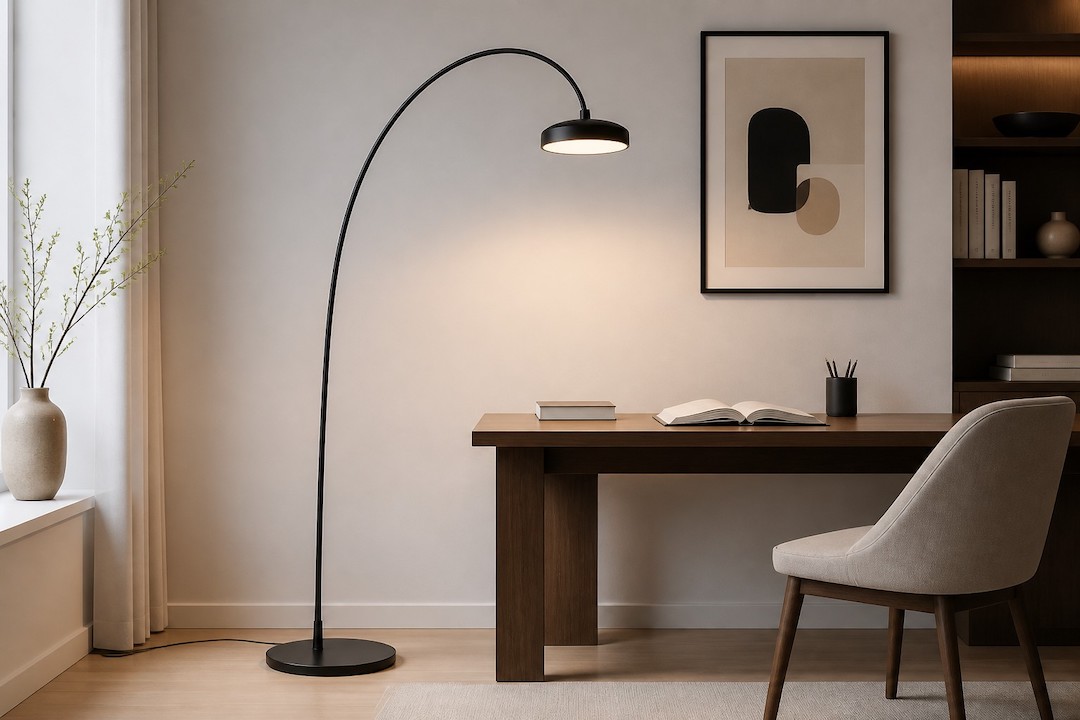
One of the defining features of a good minimalist floor lamp is its ability to provide ample light without taking up much space. Slender poles, small bases, and integrated designs are key. You want the lamp to add to the room, not dominate it physically or visually.
Material Matters: Durability and Aesthetics
The materials used in a minimalist lamp contribute significantly to its overall look and feel, as well as its longevity.
Metal: Sleek and Sturdy
Stainless steel, brushed aluminum, and matte black or white powder-coated metals are common choices. They offer durability and a clean, industrial-chic aesthetic that aligns perfectly with modern minimalist design. Metals also tend to conduct heat well, which is beneficial for LED lamps.
Wood: A Touch of Warmth
While less common in strict modern minimalism, some designs incorporate elements of natural wood. This can soften the overall look, adding a touch of Scandinavian warmth without sacrificing the clean lines. Look for light-toned woods like maple or ash, often paired with metal accents.
Composites and Plastics: Innovative Forms
High-quality plastics and composite materials can allow for more unique and sculptural forms. When well-executed, these can contribute to a futuristic or unusually sleek appearance. Ensure the quality of these materials is high to avoid a cheap look or feel.
Light Source: LED Is King
If you’re buying a new lamp, there’s really only one choice for the light source in a study room: LED.
Energy Efficiency
LEDs consume significantly less energy than incandescent or even fluorescent bulbs, which means lower electricity bills and a smaller environmental footprint.
Longevity
LED bulbs last tens of thousands of hours, meaning you won’t be constantly replacing them. This is a practical benefit that adds to the “set it and forget it” minimalist ethos.
Low Heat Emission
Compared to traditional bulbs, LEDs produce very little heat. This is important in a study environment where you might be working close to the light source for extended periods. It prevents your workspace from feeling uncomfortably warm.
Instant On, No Flicker
LEDs turn on instantly to full brightness and typically don’t flicker, which can be a real headache inducer for some people working under fluorescent lights.
Placement Pointers for Optimal Lighting
Even the best lamp won’t perform optimally if it’s not positioned correctly. Thoughtful placement makes all the difference in a study room.
Avoid Direct Overhead Glare
Placing a floor lamp directly above your head or monitor can create harsh shadows and screen glare. The goal is to illuminate your workspace, not to blast light directly into your eyes or onto your screen.
Side and Behind Your Workspace
The most effective placement is often slightly to the side and slightly behind your main workspace (desk). This illuminates the area without creating direct glare. If you’re right-handed, place it to your left to avoid shadows cast by your hand. If left-handed, place it to your right.
Illuminating Your Reading Material
When reading physical books or documents, you want the light to fall evenly across the pages. Position the lamp so that the light source is above and slightly in front of the material you’re reading, minimizing shadows.
Complementing Natural Light
Your lamp should supplement, not compete with, natural light. If your study room has a window, try to position your desk and lamp to take advantage of the natural light during the day, using the lamp primarily in the evenings or on darker days.
Ambient vs. Task Lighting
It’s helpful to think about the two types of light in your study room:
Ambient Lighting
This is the general, background light that fills the room. Your minimalist floor lamp can contribute to this, but it’s primarily designed for task lighting. If your room lacks sufficient ambient light, consider adding a ceiling fixture or a small table lamp for overall illumination.
Task Lighting (Where the Floor Lamp Shines)
This is the focused light aimed directly at your work surface. Your minimalist floor lamp should excel at this. It should provide enough intensity to prevent eye strain without being overpowering.
Integrating with Your Study Room Decor
A minimalist floor lamp isn’t just a functional item; it’s a design element. It needs to harmonize with the rest of your study room.
Color Coordination
Choose a lamp color that either blends seamlessly with your existing palette or provides a subtle, intentional contrast.
Neutral Tones Reign Supreme
Matte black, white, gray, or brushed metallic finishes are classic minimalist choices. They are versatile and won’t clash with most color schemes. A black lamp can anchor a bright room, while a white one can disappear into it for a cleaner look.
Pop of Subtle Color
If your study room is predominantly neutral, a lamp with a very subtle pop of color (e.g., a muted forest green or a deep navy) can add interest without being overwhelming. This is more about a carefully chosen accent than a loud statement.
Scale and Proportion
The size of your lamp should be appropriate for the size of your room and your desk. A massive, imposing lamp will counteract the minimalist aesthetic in a small space.
Don’t Overwhelm the Space
A slender, tall lamp can draw the eye upwards and make the room feel taller. However, ensure its base doesn’t block pathways or make the space feel cramped. Its width and overall visual weight should be in proportion to your desk and other furniture.
Harmonizing with Furniture Lines
Look for a lamp whose lines and angles complement your existing furniture. If your desk has sharp, angular lines, a lamp with similar geometry will create a cohesive look. If your furniture is softer and more organic, a slightly curved minimalist lamp might fit better.
Cable Management: A Minimalist Mandate
Nothing ruins a clean, minimalist look faster than a tangled mess of cables.
Integrated Cable Channels
Some lamps are designed with internal cable channels to keep the power cord neatly tucked away. This is a highly desirable feature.
Creative Hiding Solutions
If your lamp doesn’t have integrated cable management, use cable clips, ties, or discreet cable covers to keep the cord tidy and out of sight. Run it along the wall or behind furniture whenever possible. The goal is an uninterrupted visual flow.
Beyond the Basics: Smart Features and Sustainability
Modern minimalist lamps aren’t just about good looks and light; many incorporate technology and environmental consciousness.
Smart Lighting Integration
Many newer minimalist floor lamps can be integrated into smart home ecosystems.
App and Voice Control
Imagine turning your lamp on, off, or adjusting its brightness with a voice command or a tap on your phone. This adds a layer of convenience that perfectly aligns with a streamlined, modern lifestyle.
Scheduling and Automations
Set your lamp to turn on automatically when the sun sets or to gradually brighten as your alarm goes off. These automations can make your study routine more efficient and less jarring.
Sustainable Choices
As consumers, we’re increasingly aware of the environmental impact of our purchases.
Recycled and Responsibly Sourced Materials
Look for lamps made from recycled metals or plastics, or those that explicitly state they use responsibly sourced materials. This aligns with the broader minimalist philosophy of thoughtful consumption.
Longevity and Repairability
A genuinely sustainable product is one that lasts a long time and is designed to be repaired, not just replaced. While many minimalist lamps are sealed units, some allow for component replacement. In any case, the inherent longevity of LED means less waste in the long run.
A modern minimalist floor lamp for your study room is more than just a light source; it’s an investment in your focus, comfort, and the overall aesthetic of your workspace. By considering factors like adjustable light, durable materials, strategic placement, and seamless integration, you can choose a lamp that not only illuminates your tasks but also enhances your ability to learn and create effectively. It’s about creating an environment where clarity and productivity can thrive, all while looking effortlessly chic.